The Back-Nine Problem Every Serious Omaha Golfer Knows
You were striping it on the range. Through the first few holes the turn felt full and the driver was coming off the face hot. Then somewhere around the 13th tee, your lower back tightened up, your backswing got shorter, and your tee shots started coming up 10 to 15 yards short. By the time you reached the clubhouse, you were thinking more about ice and ibuprofen than your scorecard.
Whether you tee it up at Omaha Country Club, Happy Hollow Club, Shadow Ridge, Champions Run, or Oak Hills—or you book tee times at Tiburon or Pacific Springs—this story is incredibly common among dedicated Omaha golfers. Most players respond by buying a new driver or chasing another swing tip. But in our experience at One80 Chiropractic and Functional Rehab, the real limiter is often not the swing at all. It is the body trying to make that swing.
Your Swing Is Only as Good as Your Mobility
A powerful, repeatable golf swing depends on three regions working together: the thoracic spine (mid-back), the hips, and the lumbar spine (lower back). Each has a very different job.
The Thoracic Spine: Your Rotation Engine
The mid-back is designed to rotate. A healthy thoracic spine provides a large share of the upper-body turn in your backswing and allows your chest to keep rotating through impact and into a full finish. Unfortunately, long hours at a desk, on a laptop, or behind the wheel slowly lock this region into a rounded, stiff posture. When your thoracic spine cannot rotate, your shoulders cannot turn fully, and the body goes looking for that rotation somewhere else.
Hip Internal Rotation: The Brakes and the Accelerator
Your hips are the other major source of rotation. The trail hip needs to rotate internally to load into the backswing, and the lead hip needs to rotate internally to let you post up and turn through impact. Limited hip internal rotation—very common in active adults and in anyone who sits for much of the week—makes it difficult to load, turn, and clear your hips without compensating.
The Lumbar Spine Pays the Bill
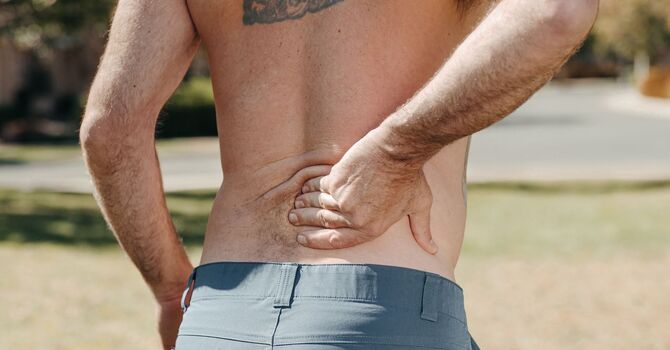
The lower back is built mainly for stability, not rotation; each lumbar segment allows only a few degrees of twist. When the thoracic spine and hips are locked up, the lumbar spine is forced to over-rotate and over-extend, swing after swing. Over 18 holes—or 36 on a member-guest weekend—that repetitive stress can irritate the facet joints, aggravate discs, and leave the surrounding muscles guarding and spasming. That is the classic back-nine back.
Swing Faults That Are Really Mobility Problems
Many of the faults golf professionals spot on video have a physical root cause. Some of the most common include:
- Early extension: The hips thrust toward the ball and you lose your posture in the downswing. This often traces back to limited hip internal rotation or flexion, or glutes that are not firing well.
- Reverse spine angle: At the top of the backswing, the upper body tilts toward the target instead of turning. It is frequently a sign that the thoracic spine cannot rotate, and it places significant side-bending and extension stress on the lower back.
- A short, "arms-only" backswing: When the chest cannot turn, the arms take over. That robs you of stored energy and clubhead speed—and often overloads the elbows and shoulders.
- Sway and slide: If the hips cannot rotate, the pelvis drifts laterally instead, making consistent contact harder and stressing the lower back and sacroiliac (SI) joints.
Your teaching professional can show you what is happening. But if your body physically cannot reach the positions they are asking for, the change will not hold up under pressure—or on the back nine when you are tired. The best results come when mobility work and swing instruction support each other.
How One80 Helps Omaha Golfers Turn Better and Hurt Less
At our clinic near Millard, Dr. Brett Classen starts with a golf-focused movement evaluation instead of only looking at where it hurts. That typically includes seated trunk rotation, hip internal and external rotation, pelvic control in your golf posture, single-leg balance, shoulder mobility, and a careful look at how your pain behaves. From there, your plan may combine:
- Chiropractic adjustments: Restoring motion to stiff thoracic segments, ribs, hips, and SI joints so rotation comes from the right places.
- Active Release Techniques (ART): Precise hands-on treatment to release adhesions in the lats, pecs, hip rotators, hip flexors, glutes, and quadratus lumborum—tissues that commonly restrict the turn.
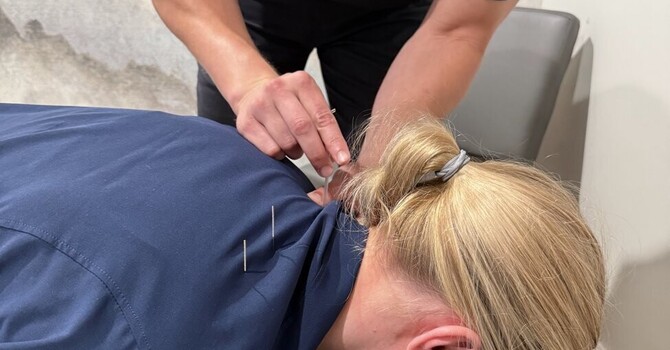
- Dry needling: Targeted release of deep trigger points in the glutes, lower back, and mid-back that keep muscles guarding long after a round.
- Instrument-assisted soft tissue mobilization (IASTM): Improving glide through the thoracolumbar fascia, hips, and outer thighs.
- Golf-specific rotational rehab: Open-book rotations, 90/90 hip switches, pelvic tilt drills in golf posture, anti-rotation presses, half-kneeling cable chops, and medicine-ball rotational throws—progressively loaded so your new range of motion is usable at swing speed.
What Golfers Often Notice
Every golfer is different, and we never promise a specific number of yards. But when rotation is restored in the mid-back and hips, many golfers tell us their backswing feels fuller and easier, they finish in balance more often, and they are not stiff and sore the morning after. Clubhead speed tends to follow better sequencing—not more effort. Most importantly, they are able to play 18 or 36 holes, round after round, without worrying about their back.
Why the Off-Season Is the Best Time to Fix Your Turn
Nebraska winters push many golfers indoors to simulators and range domes. That makes the off-season the perfect window to rebuild mobility and strength without sacrificing your summer. Address it now, and you can show up to opening day in the spring turning freely instead of spending April and May fighting a sore back.
A Quick Self-Check You Can Do Today
- Seated rotation test: Sit tall on a chair with a club across your shoulders and rotate each direction. A noticeable difference between sides—or pain—is a red flag for your swing.
- 90/90 hip check: Sit on the floor with both knees bent at 90 degrees, one leg in front and one to the side. Try to switch sides without using your hands. Big restriction on one side often shows up in the swing.
- Pelvic tilt in golf posture: Address an imaginary ball and try to tilt your pelvis forward and back without moving your upper body. If you cannot separate the two, your lower back is likely doing extra work.
When to get checked promptly: If back pain travels below the knee, or you notice numbness, tingling, or leg weakness, have it evaluated rather than playing through it. Learn more about our approach to back pain and sciatica.
Ready to Play 18–36 Holes Pain-Free All Season?
Whether you are chasing more distance, protecting your spine, or simply want to keep up with your regular foursome for years to come, a golf-focused evaluation is the place to start. Our Southwest Omaha clinic is a short drive from West Omaha, Millard, and Elkhorn.
One80 Chiropractic and Functional Rehab — Dr. Brett Classen, DC
4555 S 133rd ST, Omaha, NE 68137 • 402-401-4054
Mon–Thu 7:00 AM–1:00 PM & 2:00 PM–5:30 PM • Fri 8:00 AM–12:00 PM • Sat–Sun by appointment
Schedule your appointment online or contact our team with questions. Appointments are recommended; walk-ins are welcome when the schedule allows.

Brett Classen
Contact Me