When Your Workday Turns into a Headache
It often starts the same way: a tight, band-like pressure around the forehead or a dull ache at the base of the skull that creeps in by mid-afternoon. If you spend hours at a computer, on your phone, or behind the wheel, there is a good chance your neck is playing a bigger role in those headaches than you realize. At One80 Chiropractic and Functional Rehab in Southwest Omaha, we help desk workers, students, and busy parents get to the root of tension headaches and “tech neck” instead of just reaching for another pain reliever.
What Is Tech Neck?
Tech neck describes the strain caused by forward head posture—when your head drifts in front of your shoulders while looking down at a screen. Your head weighs roughly 10–12 pounds in a neutral position, but every inch it moves forward greatly increases the load on the muscles and joints of your neck. Over time, that constant strain affects three key areas:
- The upper cervical spine: The small joints at the top of the neck can become stiff and irritated.
- The suboccipital muscles: These small muscles at the base of the skull stay contracted to keep your eyes level, and they commonly refer pain into the head.
- The upper trapezius and levator scapulae: These shoulder and neck muscles tighten, develop trigger points, and pull on the neck.
Tension Headaches vs. Cervicogenic Headaches
Tension-type headaches usually feel like a steady pressure or tight band around the head and are closely linked to muscle tension and stress. Cervicogenic headaches start in the neck itself—often on one side—and may worsen with certain neck movements or sustained postures. Both are frequently driven by the same musculoskeletal problems, which is why addressing the neck and upper back can make such a difference.
Important: A sudden, severe “worst headache of your life,” or a headache with fever, confusion, vision changes, weakness, or numbness, needs immediate medical attention.
How One80 Treats Headaches at the Source
Dr. Brett Classen begins with a one-on-one evaluation of your posture, neck and upper back mobility, and the muscles that may be referring pain into your head. From there, your plan may include:
- Gentle cervical and thoracic adjustments to restore motion in stiff neck and upper back joints. Improving mid-back mobility helps take pressure off the neck.
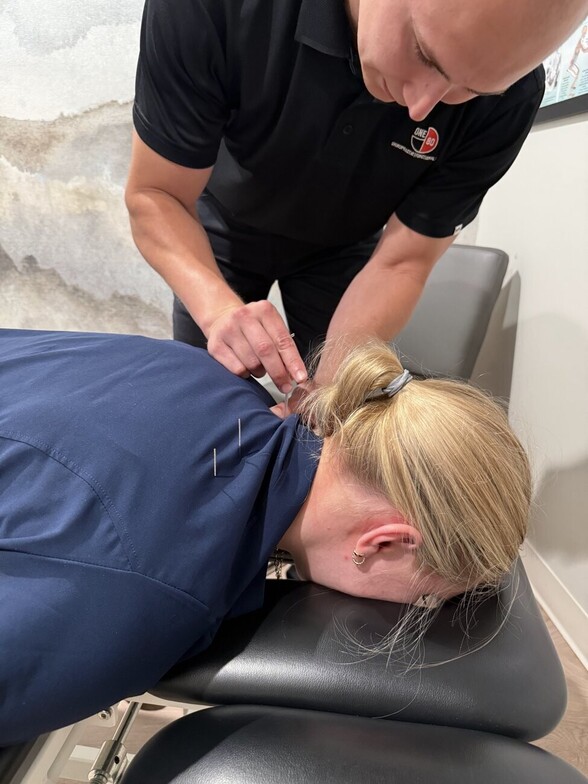
- Dry needling to release active trigger points in the suboccipitals, upper traps, and levator scapulae—common sources of referred headache pain.
- Active Release Techniques (ART) to break up adhesions and restore normal glide in tight neck, shoulder, and chest muscles.
- Instrument-assisted soft tissue therapy (IASTM) and cupping to ease stubborn muscle tension through the shoulders and upper back.
- Postural strengthening for the deep neck flexors and upper back muscles so you can hold good posture without fighting fatigue.
Simple Habits to Support Your Neck
- Raise your monitor so the top of the screen is near eye level.
- Bring your phone up toward your eyes instead of dropping your head down.
- Take a short movement break every 30–45 minutes to roll your shoulders and gently tuck your chin.
- Stay hydrated and keep a consistent sleep routine.
Find Relief from Headaches in Omaha
You do not have to plan your days around headaches. Our unhurried, hands-on approach combines adjustments, soft tissue work, and functional rehab—without rushed visits or long-term contracts. Schedule your appointment online, call 402-401-4054, or visit our office at 4555 S 133rd ST near Millard.

Brett Classen
Contact Me